
A palletizing robot cell automates stacking products onto pallets at production line endpoints. These systems combine industrial robots, specialized grippers, conveyors, and control software into integrated cells that replace manual palletizing operations. Manufacturing facilities worldwide deploy these cells to address labor shortages while improving throughput and workplace safety.
The technology has evolved significantly since mechanical palletizing systems first appeared in the late 1940s. Today’s robotic cells feature vision systems, AI-driven pattern optimization, and the flexibility to handle multiple product types without manual changeovers. Unlike older mechanical systems locked into fixed patterns, modern robotic palletizers adapt to changing production demands within minutes.
How Does a Palletizing Robot Cell Work?
Products arrive via infeed conveyors where sensors detect position, dimensions, and weight. The robot controller processes this data and calculates optimal placement based on programmed pallet patterns. Vision systems and barcode scanners confirm product identification before each pick.
The robotic arm, equipped with end-of-arm tooling matched to product characteristics, lifts items from the conveyor. Different applications require different grippers: vacuum systems for boxes with flat surfaces, mechanical claws for bags or irregular shapes, and specialized tools for delicate items like glass bottles. The robot places each product precisely according to the pattern, building layers that maximize pallet stability and space utilization.
What happens after layer completion?
Once a layer finishes, the system can insert slip sheets or tier sheets between layers for added stability. Some advanced cells include four-sided clamping to center and compress each layer before deposit, ensuring tight, uniform stacking. The robot continues building subsequent layers until the pallet reaches its programmed height or weight limit.
Can one robot cell handle multiple pallet positions?
Production-focused cells typically include dual pallet positions for continuous operation. While the robot stacks products on one pallet, operators safely remove the completed pallet from the second position and replace it with an empty one. This configuration keeps the robot working almost continuously, eliminating downtime between pallet changes.
Industrial vs Collaborative Palletizing Systems
Industrial robotic palletizers handle heavier payloads and operate at higher speeds than their collaborative counterparts. These systems support payloads ranging from 80 kg to well over 700 kg, with some models capable of 2,200 cycles per hour. They require safety fencing and light curtains to protect workers from the robot’s operating area.
The choice between industrial and collaborative systems depends on production requirements. High-volume lines with heavy products benefit from industrial robots’ speed and capacity. Operations with lighter products, limited space, or needs for frequent human intervention find cobots more practical. Some facilities deploy both types, using industrial robots for main production lines and cobots for flexible, lower-volume applications.
What Industries Use Palletizing Robot Cells?
Food and beverage manufacturers represent the largest user base for robotic palletizing. These industries require consistent handling of diverse packaging types, from bottles and cans to shrink-wrapped cases and individual food containers. Robots work in temperature-controlled environments, including freezer applications, with special coatings protecting components in extreme conditions.
Pharmaceutical companies deploy palletizing robots where contamination control matters most. The systems handle everything from small vial cartons to bulk medicine cases while maintaining the traceability required for regulatory compliance. In facilities processing radioactive or hazardous materials, robots operate in isolated cells, eliminating human exposure to dangerous substances.
Are there other major sectors using these systems?
Automotive parts manufacturers palletize engine components, tires, and electronic assemblies. The technology reduces repetitive motion injuries common in manual handling of heavy automotive parts. Building materials, chemicals, paper products, and consumer goods sectors all utilize robotic palletizing, with each industry adapting end-of-arm tooling to specific product characteristics.
Key Components of a Palletizing Robot Cell
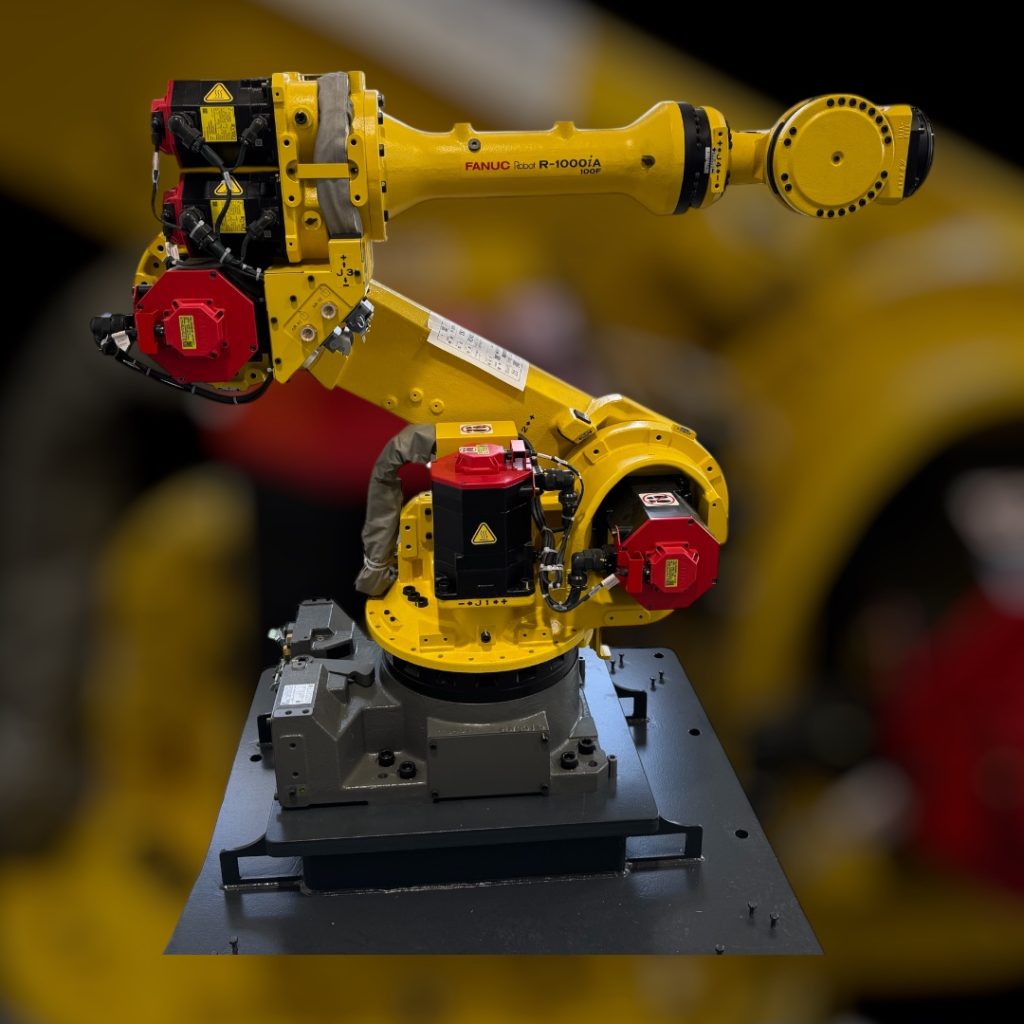
The robot arm forms the cell’s core, with selection based on required reach, payload capacity, and speed. Six-axis articulated robots offer maximum flexibility for complex pallet patterns and varying product sizes. Four-axis palletizing robots optimize speed for simpler stacking patterns where rotation around vertical and horizontal axes suffices.
End-of-arm tooling defines how reliably the system picks and places products. Vacuum grippers excel with corrugated boxes and flat-surfaced items. Claw grippers adapt to bags, bundles, and irregular packaging. Multi-function grippers switch between suction and mechanical grip modes, accommodating product changeovers without physical tool changes. The design of this tooling determines pick reliability and ultimately affects overall system throughput.
What role does the control system play?
Advanced controllers coordinate all cell components: robot motion, conveyor timing, pallet dispensers, and safety systems. The software includes pattern-building interfaces where operators design new stacking configurations in minutes, not hours. Most systems store multiple pattern recipes, allowing quick changeovers between products. Some controllers incorporate AI for real-time optimization, adjusting patterns based on product weight distribution and pallet stability calculations.
Do cells integrate with other equipment?
Complete end-of-line systems connect palletizing cells with upstream conveyors, case sealers, labelers, and downstream stretch wrappers. Standardized communication protocols ensure synchronized operation. For instance, when a pallet completes, the system automatically signals the stretch wrapper to begin while the robot starts building the next pallet. This integration transforms individual machines into continuous production segments that maximize facility efficiency.
What Are the Financial and Operational Benefits?
Labor cost reduction stands as the primary driver for automation. A single robotic palletizing cell cuts line labor costs by up to 50% while boosting throughput by more than 35%. These improvements typically appear within months of installation, with many operations achieving ROI in 12 to 24 months. Facilities running multiple shifts see even faster payback as robots operate continuously without overtime costs or productivity decline.
Consistency benefits extend beyond labor savings. Robots place every item in precisely the correct position, eliminating the misaligned loads and product damage common in manual operations. This precision reduces damage claims during transport and improves space utilization in trucks and warehouses. The consistent quality also means fewer rejected loads and customer complaints.
How do these systems improve workplace safety?
Manual palletizing causes repetitive strain injuries, back problems, and fatigue-related accidents. Automating this physically demanding work removes workers from hazardous situations. Employees reassigned to less strenuous roles report higher job satisfaction and facilities see reduced workers’ compensation claims. The safety improvements also help manufacturers attract and retain workers who increasingly avoid physically demanding positions.
What Should You Consider Before Implementation?
Current labor costs provide the baseline for ROI calculations. Document annual spending on manual palletizing labor, including wages, benefits, overtime, and turnover costs.
Throughput requirements determine system specifications. Calculate required pallets per hour across all shifts, factoring in product mix and changeover frequency. A facility palletizing six different products daily needs different capabilities than one running a single product. Product variety affects both robot selection and end-of-arm tooling complexity.
Does available floor space limit options?
Measure the area available for the robot cell, including space for conveyors, safety zones, and pallet handling. Compact collaborative systems require less floor space than traditional industrial setups, with some mobile palletizing cells occupying just the footprint needed for two pallet positions. If space constraints exist, consider vertical reach as some robots stack taller pallets in smaller footprints through extended vertical travel.
What about integration with existing equipment?
Evaluate how the palletizing cell connects with upstream production equipment and downstream handling systems. Most modern robots support standard industrial communication protocols, but older equipment may require interface adapters. Plan for any conveyor modifications or pallet handling equipment needed to support continuous flow. The most successful installations consider the entire end-of-line workflow, not just the palletizing operation in isolation.
