
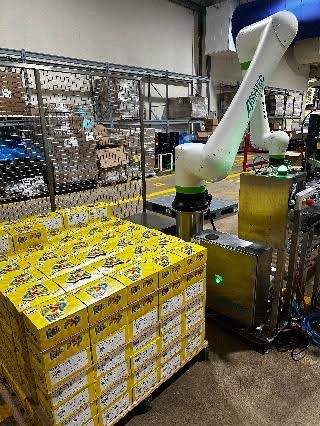
Collaborative robots are reshaping food manufacturing at an unprecedented pace. The technology addresses critical challenges facing producers today, from persistent labor shortages to stringent hygiene requirements. Unlike traditional industrial robots confined behind safety barriers, cobots work directly alongside human operators, creating flexible production environments that adapt to changing demands.
The food industry has historically lagged in automation adoption due to the delicate nature of products and complex handling requirements. Modern cobots, equipped with advanced sensors and intelligent programming, now handle tasks that were once considered impossible for machines. According to industry analysts, the collaborative robotics market reached approximately $600 million and continues expanding as manufacturers recognize the technology’s transformative potential.
What Makes Cobots Different From Traditional Industrial Robots?
Cobots incorporate force-limiting technology and advanced sensors that detect nearby objects and people, eliminating the need for safety cages. This fundamental difference enables seamless human-robot collaboration on production floors. Traditional robots require extensive floor space for protective barriers, while cobots operate within compact footprints, often mounted on mobile platforms or rails.
Programming simplicity sets cobots apart. Operators can teach movements through hand-guidance, dragging the robotic arm through desired motions. This intuitive approach reduces setup time from weeks to hours, allowing manufacturers to redeploy units across different production lines as needs change. The portability factor maximizes return on investment, particularly during seasonal production peaks when flexibility becomes crucial.
How Do Cobots Improve Food Safety Standards?
Human contact represents the primary contamination risk in food production environments. Even with rigorous hygiene protocols, workers can inadvertently introduce pathogens through touch, breath, or clothing particles. Cobots eliminate this vulnerability by minimizing direct human interaction with products.
Food-grade cobots feature enclosed designs with internal cable routing and corrosion-resistant materials. These units withstand high-pressure washdowns and harsh chemicals.
Without physical guarding, fewer hidden spaces exist where pathogens could accumulate. This design advantage simplifies cleaning procedures and reduces contamination points. Robotic systems equipped with AI-powered vision technology perform real-time quality inspections, detecting foreign objects, size deviations, and appearance defects with remarkable accuracy. Every robotic action gets tracked and recorded, creating comprehensive traceability that supports regulatory compliance and rapid issue resolution.
What Applications Work Best For Cobots?
Packaging and palletizing operations see the highest cobot adoption rates. These repetitive tasks cause significant strain on human workers, leading to musculoskeletal injuries and reduced productivity. Cobots lift heavy cartons, stack products, and handle packaging materials continuously without fatigue, freeing employees for higher-value activities requiring human judgment.
Material handling throughout production facilities represents another strong application. Cobots transport ingredients, move finished products between stations, and manage inventory with programmable routes that adapt to workflow changes. In dairy operations, units handle cheese blocks, cream cheese packaging, and various container sizes without requiring specialized tooling changes.
Can Cobots Handle Food Contact Applications?
Modern cobots excel in direct food contact scenarios when properly specified. Dispensing operations for sealants, adhesives, and food products require precision that cobots deliver consistently. Filling applications for containers and bottles maintain exact measurements, reducing waste while ensuring regulatory compliance.
Quality inspection integrated with vision systems automates weight verification, size checking, and visual assessment. These automated inspections create consistent products while minimizing defects that could trigger recalls. Some manufacturers even deploy cobots for specialized tasks like cake decorating, demonstrating the technology’s versatility.
Addressing Labor Challenges With Collaborative Automation
Food manufacturers face mounting pressure from workforce shortages, particularly during seasonal production peaks. Cobots provide immediate relief by handling tasks that prove difficult to staff consistently. The technology operates continuously without breaks, vacation time, or sick days, ensuring uninterrupted production when demand surges.
Rather than replacing workers, cobots augment human capabilities. Employees shift from physically demanding, repetitive tasks to roles requiring problem-solving, quality oversight, and process optimization. This transition improves job satisfaction while developing more valuable skill sets within the workforce. Bob’s Red Mill automated palletizing operations with a UR20 cobot, freeing four operators to focus on activities that leverage their expertise.This accessibility democratizes automation, making advanced manufacturing tools available to facilities of all sizes.
What About Extreme Temperature Environments?
Food processing frequently requires operation in challenging conditions, from refrigerated storage areas to hot ovens and humid greenhouses. Cobots handle these environments without complaint, performing consistently where human workers face discomfort and potential health risks.
Refrigerated operations for frozen foods, dairy products, and chilled beverages benefit from cobot deployment. The technology maintains precision and speed regardless of temperature, eliminating productivity drops associated with cold environments.
Wine bottling facilities exemplify successful cobot integration in varied conditions. Units handle palletizing operations efficiently, allowing workers to concentrate on quality control and oversight rather than heavy lifting. The flexibility to operate across temperature ranges within a single facility maximizes equipment utilization and investment returns.
How Quickly Can Manufacturers See ROI?
Collaborative robotics delivers return on investment measured in months rather than years. The relatively low acquisition cost compared to traditional industrial robots, combined with minimal infrastructure requirements, accelerates payback periods. Quick deployment times mean production improvements begin almost immediately after installation.
Smaller footprints eliminate expensive facility modifications. Portable designs allow manufacturers to move units between production lines, maximizing utilization rates. During off-peak periods, cobots redeploy to different departments or processes, ensuring continuous value generation rather than sitting idle.
Increased throughput directly impacts revenue. When cobots boost hourly production rates, facilities handle larger orders and meet tighter delivery schedules. Indirect benefits include improved process efficiency, reduced material waste through precision handling, and enhanced product consistency that minimizes customer complaints.
What Limitations Should Manufacturers Consider?
Cobots operate at slower speeds than traditional industrial robots, a trade-off for safe human collaboration. Applications requiring maximum speed may need different automation approaches. Payload limitations also factor into equipment selection, with most collaborative units handling lighter loads compared to heavy-duty industrial robots.
Reach constraints matter for certain applications. Cobots typically offer shorter arms than traditional robots, which may require creative workspace design. Complex programming scenarios sometimes demand specialized expertise beyond basic operator training, though most common applications work within standard capabilities.
End-of-arm tooling requires careful consideration, particularly for applications involving sharp implements like meat trimming. Even advanced sensors cannot eliminate all risks when handling cutting tools, necessitating additional safety measures. Manufacturers must conduct thorough risk assessments before implementing such applications.
Industry-Specific Applications Driving Adoption
Bakery operations utilize cobots for dough handling, product placement, and packaging. The delicate nature of baked goods once made automation challenging, but modern gripper technology combined with vision systems now enables gentle, precise handling. Facilities achieve consistent production while reducing repetitive strain injuries among employees.
Meat processing facilities deploy cobots for portioning, quality inspection, and packaging operations. The technology improves yield consistency and reduces product variation. Safety benefits prove particularly significant in environments where sharp tools and heavy products create injury risks for human workers.
Beverage production sees extensive cobot use in bottling lines, container filling, and end-of-line palletizing. Vision-guided systems ensure accurate cap placement and label alignment. Conveyor tracking capabilities allow cobots to work with moving production lines, maintaining pace without disruption.
Implementation Strategies For Success
Start with clearly defined pain points rather than attempting wholesale automation. Identify specific bottlenecks, safety concerns, or quality issues where cobots provide immediate value. This focused approach demonstrates tangible benefits while building organizational confidence in the technology.
Involve operators early in the selection and implementation process. Their hands-on knowledge of production workflows reveals opportunities and potential obstacles that management might overlook. Early engagement also builds buy-in, reducing resistance to change and accelerating adoption.
Partner with experienced integrators who understand food manufacturing requirements. Plan for scalability from the start. Single-cell installations prove concepts, but the greatest value emerges from expanding successful applications across multiple production lines. Choose systems and partners capable of supporting growth as confidence and expertise develop within the organization.
The Future Of Collaborative Automation In Food Production
Technology advancement continues accelerating, with manufacturers developing increasingly sophisticated capabilities. Enhanced vision systems, improved gripper technology, and more intuitive programming interfaces expand the range of viable applications. What seems impossible today becomes routine tomorrow as the technology matures.
Artificial intelligence enhances cobot decision-making capabilities. Vision systems that simply detect defects evolve into systems that identify patterns and recommend process improvements. Adaptive programming allows cobots to adjust operations based on product variations without manual intervention, further increasing flexibility and reducing setup time.The democratization of advanced automation continues as costs decrease and capabilities increase. Smaller manufacturers gain access to technology previously reserved for large corporations. This leveling effect drives innovation across the industry, with benefits flowing through supply chains to consumers.
FAQ
What is the difference between cobots and traditional robots?
Cobots feature force-limiting technology and advanced sensors that enable safe operation alongside human workers without safety cages. They are smaller, portable, and easier to program than traditional industrial robots, with intuitive hand-guided programming that reduces setup time from weeks to hours.
Can cobots operate in food contact applications?
Yes, food-grade cobots are specifically designed for direct food contact. They feature stainless steel construction, enclosed designs with internal cable routing, and materials that withstand high-pressure washdowns and sanitizing chemicals. These units meet IP67 and IP69K waterproofing standards and integrate with clean-in-place protocols.
How long does it take to see ROI from cobot implementation?
Cobots typically deliver return on investment within months rather than years. Quick deployment, minimal infrastructure requirements, and immediate productivity improvements accelerate payback periods. Increased throughput, reduced downtime, and eliminated seasonal labor costs contribute to rapid ROI.
What tasks are cobots best suited for in food production?
Cobots excel at packaging, palletizing, pick-and-place operations, material handling, quality inspection, and container filling. They perform repetitive tasks that cause worker fatigue and injury while maintaining consistent precision across thousands of cycles. Applications range from delicate pastry handling to heavy carton palletizing.
Do cobots replace human workers?
No, cobots augment human capabilities rather than replacing workers. They handle physically demanding and repetitive tasks, allowing employees to focus on problem-solving, quality oversight, and higher-value activities. This shift improves job satisfaction while developing more valuable skill sets within the workforce.
Can cobots work in extreme temperature environments?
Yes, cobots operate consistently in challenging conditions including refrigerated storage, near hot ovens, and in humid environments. They maintain precision and speed regardless of temperature, performing tasks where human workers would face discomfort or health risks. This capability makes them ideal for frozen foods, bakery operations, and various food processing applications.
Assatec Robotics-Time to Move to Smart Automation
If you are considering implementing collaborative robotics on the production line, Assatec Robotics LTD is the right partner for the process. The company specializes in the development, construction and full programming of robot cells and automation systems all in-house ensuring a perfect fit for your manufacturing requirements and the ability to evolve with the business.
Whether your goal is to tackle manpower shortages, improve food safety or increase productivity, smart automation is delivering meaningful and fast results. Working with experts who understand both robotics and the complexity of the food industry shortens implementation times and increases long-term value.
Contact Assatec Robotics experts and find out how cobots can upgrade your manufacturing environment.
