
Manufacturing facilities worldwide face unprecedented pressure to deliver faster, more efficiently, and with fewer errors than ever before. Traditional manual packaging operations struggle to keep pace with rising consumer demands, e-commerce growth, and labor shortages. Enter packaging robots, sophisticated automated systems revolutionizing how products move from production lines to shipping containers. These intelligent machines combine precision, speed, and flexibility to tackle everything from delicate food items to heavy industrial components.
What Makes Packaging Robots Essential for Modern Production Lines?
Packaging robots represent a fundamental shift in manufacturing philosophy. Unlike fixed automation systems locked into single tasks, modern robotic packaging machinery adapts seamlessly to changing product lines and packaging formats. These systems integrate advanced sensors, machine vision, and artificial intelligence to handle varied packaging challenges without extensive retooling. The global packaging robots market demonstrates explosive growth, expanding from 6.02 billion USD in 2023 to a projected 16.67 billion USD by 2032, reflecting widespread industry adoption across sectors.
The technology delivers measurable benefits beyond simple automation. Manufacturers report cycle time reductions of up to 40% compared to manual operations, while error rates drop dramatically through vision-guided quality control. Delta robots achieve pick rates exceeding 140 picks per minute, handling products with consistent precision impossible for human workers to maintain across eight-hour shifts. This combination of speed and accuracy transforms packaging from a production bottleneck into a competitive advantage.
How Do Different Types of Packaging Robots Handle Diverse Applications?
The packaging automation landscape features several distinct robot types, each optimized for specific tasks. Delta robots excel at high-speed pick-and-place operations thanks to their parallel link design, making them ideal for sorting small items like confectionery or pharmaceutical products. Six-axis articulated robots provide exceptional flexibility for complex packaging tasks requiring multiple orientations, from inserting products into cartons to applying labels at various angles.
SCARA robots dominate applications requiring rapid horizontal movements with vertical insertion, particularly in electronics packaging. Collaborative robots or cobots represent the newest evolution, working safely alongside human operators without protective barriers. Companies like Assatec specialize in implementing these diverse robotic solutions, matching robot capabilities precisely to client requirements across industries from food processing to pharmaceutical manufacturing.
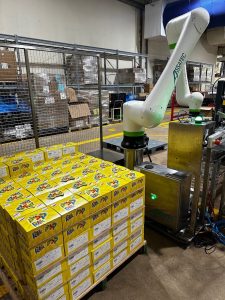
Why Are Collaborative Robots Revolutionizing Packaging Operations?
Collaborative robots fundamentally reshape packaging floor layouts and workflows. Traditional industrial robots required safety caging, consuming valuable floor space and isolating automation from human workers. Cobots eliminate these barriers through integrated safety features including speed controls, force-limiting sensors, and collision detection systems. This enables flexible production cells where robots handle repetitive tasks while humans manage quality checks and exception handling.
The financial case for cobots proves particularly compelling for small and medium manufacturers. Systems cost significantly less than traditional industrial robots, often under 30,000 USD for complete installations. Simplified programming interfaces allow operators to teach new tasks through direct arm manipulation rather than complex coding. Deployment times shrink from weeks to days, with some manufacturers achieving payback periods under 12 months through labor savings and productivity gains.
What Applications Drive the Growing Demand for Packing Robots?
Case packing represents the highest-volume application for robot packaging machines, with robots loading products into shipping cases at speeds impossible manually. The food and beverage industry leads adoption, accounting for over 40% of global packaging robot installations. These facilities require hygienic stainless steel construction with IP65 ratings, combined with gentle product handling to prevent damage to perishable goods. Robots excel at creating variety packs, mixing different products in single cases according to complex patterns.
Palletizing applications follow closely, where robots stack finished cases onto pallets for shipping. Modern systems reach around multiple pallets simultaneously, optimizing warehouse space while maintaining stable load configurations. Pharmaceutical packaging demands even greater precision, with robots handling blister packs, bottles, and syringes under stringent regulatory requirements. Vision inspection systems integrated into these cells verify every package meets quality standards before shipping.
Emerging Applications Beyond Traditional Packaging
Innovative manufacturers push robotic packaging machinery into new territories. E-commerce fulfillment centers deploy fleets of robots for order picking and custom packaging creation. Consumer goods companies use robots for promotional packaging assembly, bundling items with marketing materials for seasonal campaigns. Industrial parts manufacturers implement robots for protective packaging of delicate components, wrapping items in custom foam configurations generated by AI optimization algorithms.
How Do Robotic Packaging Systems Integrate with Existing Production Lines?
Successful robot integration requires careful coordination with upstream and downstream processes. Modern packaging robots communicate via industrial protocols like OPC-UA and Ethernet/IP, exchanging data with PLCs, MES systems, and ERP software. This connectivity enables real-time production monitoring, predictive maintenance alerts, and dynamic scheduling based on order priorities. Conveyor systems feature intelligent buffering to accommodate speed variations between production and packaging operations.
Integration specialists analyze material flow patterns to optimize robot placement and minimize handling steps. Multiple robots often work in coordinated cells, with one handling primary packaging while another manages secondary operations. Advanced systems incorporate automatic changeover mechanisms, swapping end-effectors and adjusting parameters when product transitions occur. The result is seamless automation that adapts to production schedules without manual intervention.
How Is Artificial Intelligence Transforming Packaging Robot Capabilities?
AI integration represents the next frontier in packaging automation. Machine learning algorithms analyze production data to optimize robot movements, reducing cycle times without compromising quality or safety. Computer vision enhanced by neural networks handles unprecedented product variation, adapting to different sizes, shapes, and orientations automatically. Natural language interfaces enable operators to instruct robots conversationally rather than through complex programming environments.
Predictive analytics powered by AI identify quality issues before they occur, analyzing subtle patterns in sensor data that humans miss. Adaptive gripping systems adjust pressure and approach angles based on real-time feedback, preventing damage to irregular or delicate items. As AI capabilities expand, expect to see packaging robots that learn new tasks through observation and optimize their own performance without human intervention.
What Role Do Vision Systems Play in Modern Packing Robot Performance?
Vision technology transforms robots from blind machines following fixed paths to intelligent systems responding to their environment. 3D cameras enable robots to identify and locate randomly oriented products, eliminating expensive feeding equipment. Quality inspection happens simultaneously with handling, with vision systems detecting defects, verifying labels, and confirming code accuracy. AI-based vision learns to recognize acceptable product variations while flagging genuine defects.
Advanced applications include dimensional measurement for packaging optimization and foreign object detection for food safety compliance. Vision-guided systems coordinate multiple robots in shared workspaces, preventing collisions while maximizing throughput. The integration of hyperspectral imaging enables detection of contamination invisible to conventional cameras, crucial for pharmaceutical and food applications where safety is paramount.
How Do Manufacturers Select the Right Packaging Robot for Their Needs?
Successful robot selection begins with thorough application analysis. Engineers evaluate product characteristics including size, weight, fragility, and handling requirements. Production volumes and required cycle times determine robot speed capabilities and system redundancy needs. Environmental factors like temperature, humidity, and cleanliness standards influence material selection and protection ratings. Available floor space constrains robot size and reach requirements.
Integration requirements deserve equal consideration. Compatibility with existing equipment, communication protocols, and control systems affects implementation complexity and cost. Total cost of ownership analysis includes not just initial purchase price but programming, maintenance, and potential downtime. Experienced integrators like Assatec guide clients through this selection process, leveraging decades of experience to match robotic solutions precisely to application requirements.
What Maintenance Requirements Keep Packaging Robots Operating Reliably?
Modern packaging robots require surprisingly minimal maintenance compared to earlier automation generations. Routine tasks include annual joint lubrication, periodic battery replacement, and occasional gripper component changes. Most manufacturers report 80,000-100,000 hours between major overhauls, equivalent to over nine years of continuous operation. Modular designs enable quick component replacement when issues arise, minimizing production disruptions.
Predictive maintenance capabilities dramatically reduce unexpected failures. Continuous monitoring of temperature, vibration, and motor currents alerts operators to developing issues before they cause downtime. Cloud connectivity enables remote diagnostics and performance optimization by robot manufacturers. Many facilities report that packaging robots require less attention than the conveyor systems feeding them, making automation increasingly attractive even for smaller operations.
How Are Packaging Robots Addressing Sustainability and Environmental Goals?
Environmental considerations increasingly drive packaging automation decisions. Robots optimize material usage through precise cutting, dispensing, and placement, generating 20-30% less waste than manual operations. Their consistent quality reduces scrap rates and the environmental impact of defective products requiring disposal. Energy-efficient designs minimize power consumption, with robots using electricity only during active movements rather than continuously like traditional automation.
Sustainable packaging formats benefit from robotic precision. Robots handle recyclable materials and biodegradable packaging with the gentle touch required to prevent damage. Vision systems sort mixed materials for recycling, supporting circular economy initiatives. Companies implementing robotic packaging report measurable progress toward sustainability goals while simultaneously improving operational efficiency and reducing costs.
