The healthcare industry is undergoing a significant transformation with the increasing integration of advanced robots in clinics and hospitals worldwide. Medical robotics enables healthcare teams to perform more precise surgeries, improve patient care quality, and reduce risks associated with medical procedures. The global medical robotics market has grown from approximately $14.9 billion in 2023 to a projected $57 billion by 2032, indicating growing confidence in these technologies.
The use of robots in healthcare ranges from advanced surgical systems to mobile robots performing logistical tasks in hospitals. Cutting-edge technologies allow doctors to perform less invasive procedures with smaller incisions, faster recovery times, and higher success rates. The growing demand for advanced automation solutions drives companies like Assatec to provide innovative robotic solutions tailored to the needs of the medical industry.
What are medical robots and how do they operate?
Medical robots are advanced technological systems that integrate robotics, artificial intelligence, computer vision systems, and precise sensors. These systems assist medical professionals in performing complex tasks with high accuracy, reducing human error and improving clinical outcomes. Robots operate under full human supervision, with doctors and medical staff controlling precise movements through advanced control consoles.
The technology enables capabilities that exceed human abilities, including extended range of motion, capability for precise micro-movements, and filtering of natural tremors. Robots in healthcare operate based on real-time information from sensors, cameras, and navigation systems, allowing them to adapt to changes during medical procedures. Systems like those provided by Assatec combine mechanical precision with artificial intelligence technologies to create reliable automation solutions.
How do robots improve medical surgeries?
Robotic surgical systems like da Vinci perform minimally invasive surgeries through exceptionally small incisions. Intuitive surgical robots allow doctors to maneuver tiny surgical instruments with maximum precision while viewing a three-dimensional screen with high magnification. Robotic surgeries offer significant advantages to patients, including smaller scars, reduced blood loss, decreased post-operative pain, and shorter recovery times.
The da Vinci system, the most widely used surgical robot in the world, has performed over 14 million surgeries since its FDA approval in 2000. The new da Vinci 5 platform includes over 150 design innovations and 10,000 times the computing power of previous models. Advanced technology includes force feedback that allows doctors to feel pressure on tissues and enhanced vision systems for maximum precision.
What role do service robots play in healthcare systems?
Service robots in healthcare perform critical operational tasks that free medical teams to focus on direct patient care. Autonomous mobile robots navigate hospitals using LIDAR systems, computer vision, and mapping, performing tasks such as medication delivery, medical equipment transport, laboratory sample collection, and linen transport. These systems operate 24/7, provide accurate reports on task completion, and reduce physical burden on nursing staff.
Disinfection robots use high-intensity UV radiation to sanitize patient rooms and public areas in hospitals. The Xenex device, a mobile robot developed specifically for disinfection, can sanitize an entire room in minutes using broad-spectrum UV rays. The technology has proven effective in preventing hospital-acquired infections, which cost healthcare systems billions of dollars annually.
How do social robots contribute to patient wellbeing?
Social robots in healthcare provide emotional and social support to patients, especially elderly individuals and those with chronic illnesses. These robots are equipped with cognitive learning systems, facial expression recognition, and the ability to conduct meaningful conversations. A study examining 200 children in three medical facilities found that 26% of patients reported increased joyfulness and 34% experienced significant stress reduction following interaction with a social robot.
The Robin companion robot, developed by Expper Technologies, serves in hospitals to provide companionship to children during treatments. The system is based on behavioral psychology and play therapy and can remember conversations and recognize children’s facial expressions. In Europe, a robot named James helped elderly people stay connected with their families during coronavirus restrictions by connecting to Facebook Messenger. The ability to provide social interaction helps prevent loneliness and improves patient mood.
What are the benefits of robots in rehabilitation and physical therapy?
Robotic exoskeleton technology provides powered support to individuals recovering from neurological injuries such as stroke, spinal cord injury, or brain trauma. Devices like EksoNR enable patients to engage in repetitive weight-bearing gait training early in recovery, even before they can walk independently. The process encourages neuroplasticity, the brain’s ability to reorganize itself, and improves balance, strength, and coordination.
A randomized controlled clinical trial showed that 12 weeks of exoskeleton-based training significantly improved independent walking ability in people with incomplete spinal cord injury compared to standard therapy alone. The technology allows physical therapists to focus on guidance and monitoring while the robot performs the physically demanding work. Rehabilitation robots are equipped with depth cameras and artificial intelligence that monitor patient movements, accurately measure angles of motion, and track progress in a computerized manner.
How do robots assist in remote medical communication?
Telepresence robots enable doctors to communicate with patients from remote locations, expanding access to quality healthcare services. The RP-VITA system, developed by iRobot and InTouch Health, allows doctors to navigate independently through hospital corridors and patient rooms, conduct remote consultations via quality video, and meet with patients virtually. The technology proved itself especially during the coronavirus pandemic, when the need for social distancing required innovative solutions.
In Mexico, a robot named RoomieBot serves to assist medical teams with high-risk coronavirus patients. The robot, equipped with artificial intelligence algorithms and Intel-based technology, can measure temperature, blood oxygen levels, and collect medical history upon patient arrival at the hospital. The use of robots for remote care reduces medical team exposure to pathogens and enables continuous care provision even in emergency situations.
What are the challenges in implementing robotics in healthcare?
Despite the many advantages, implementing robotics in hospitals encounters several significant challenges. The initial cost of advanced robotic systems is high, with a da Vinci system costing approximately $1.5 to $2 million, in addition to ongoing maintenance costs and disposable instruments. Many hospitals struggle to recover the investment, especially those not performing high volumes of surgeries. The need for ongoing training of medical teams adds to costs and complexity.
Integrating robotic systems with existing hospital infrastructure presents technical and logistical challenges. Robots need to communicate with medical information systems, elevators, automatic doors, and safety systems. The need for reliable network infrastructure and backup systems is critical to prevent service interruptions. Regulation and medical approvals require long and expensive processes, slowing the entry of new technologies to market. These factors create a barrier to entry for smaller institutions or developing countries.
What future awaits robotics in healthcare?
The future of robots in the medical field includes significant advancement in artificial intelligence technologies, machine learning, and real-time data analysis. Future systems will be more autonomous, capable of performing complex tasks without close human supervision, and will provide more accurate diagnoses. Tiny nanorobots will be able to travel through blood vessels to deliver targeted treatments to cancerous tumors, clear plaque from arteries, and perform cellular repairs at the microscopic level.
Robotic endoscopic capsules that can be swallowed will scan the digestive system, collect diagnostic information, and send data to operators. Artificial intelligence systems will improve in diagnosing diseases, with accuracy higher than human doctors in identifying certain conditions. Machine learning algorithms can analyze X-ray images, MRIs, and CT scans faster and more accurately, enabling earlier detection of cancer and other diseases.
Why is Assatec the ideal partner for robotic solutions?
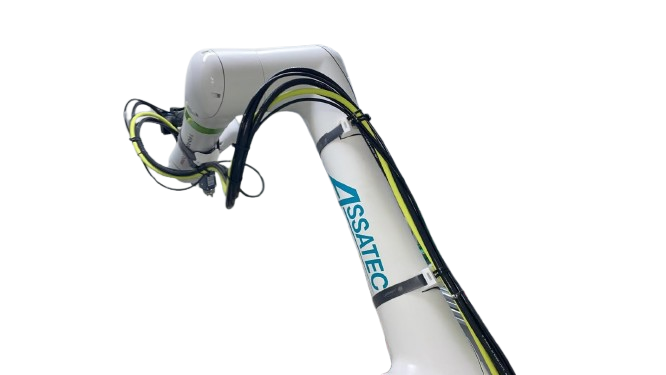
Assatec was founded in 1997 and is a leader in integrating FANUC robotic systems, specializing in developing custom robotic cells and advanced automation solutions. The company has integrated hundreds of robots in complex applications, both in Israel and abroad, including unique applications that don’t exist elsewhere in the world. Assatec’s expertise spans a wide range of industries, including medical, electronics, metalworking, and general industry.
Assatec’s solutions include comprehensive analysis of customer production processes, design and implementation of the most suitable robot and application for specific needs. The company uses only the world’s leading industrial robots from FANUC Robotics, offering payload capacities from a few grams to 2,300 kilograms. All systems are manufactured to the highest finish standards and designed to be user-friendly even for those without experience.