
Manufacturing facilities worldwide face mounting pressure to boost productivity while managing labor shortages and rising operational costs. Machine tending robots have emerged as a transformative solution, automating the repetitive tasks of loading and unloading CNC machines, injection molding equipment, and other production machinery. These sophisticated systems deliver consistent quality, operate continuously without fatigue, and fundamentally reshape how manufacturers approach production efficiency.
What Is a Machine Tending Robot and How Does It Transform Production?
A machine tending robot automates the process of feeding raw materials into machines and removing finished parts. Unlike manual operations that require constant human attention, these robotic systems handle repetitive loading and unloading cycles with remarkable precision. The technology encompasses industrial robots, collaborative robots (cobots), and complete automation cells designed specifically for machine tending applications.
Modern systems integrate advanced sensors, vision systems, and intelligent control software. According to the Wikipedia entry on robots, these automated machines can perform tasks autonomously or semi-autonomously. In machine tending, this translates to robots that adapt to part variations, compensate for positioning errors, and maintain consistent quality across thousands of production cycles.
Why Are Manufacturers Choosing Machine Tending Automation?
The decision to implement machine tending automation stems from multiple compelling factors. Labor shortages plague manufacturing globally, with skilled CNC operators becoming increasingly difficult to recruit and retain. Simultaneously, production demands intensify as customers expect shorter lead times and greater product variety.
Machine tending robots address these challenges directly. They eliminate the physical strain of repetitive motions that lead to worker injuries and fatigue. Production continues uninterrupted during breaks, shift changes, and even overnight operations. Quality remains consistent because robots execute identical movements cycle after cycle, reducing the defect rates common in manual operations.
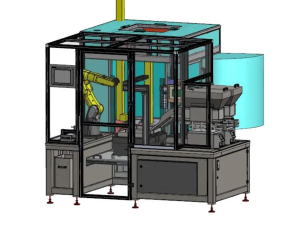
How Do Machine Tending Cobots Differ from Traditional Industrial Robots?
The emergence of collaborative robots, or cobots, represents a significant evolution in machine tending automation. Unlike traditional industrial robots that require safety caging and operate in isolated work cells, cobots integrate advanced safety features that enable them to work alongside human operators without protective barriers.
Machine tending cobots incorporate force-limiting technology and sophisticated sensors that detect human presence and adjust their behavior accordingly. When a person enters the cobot’s workspace, the robot automatically reduces speed or pauses operation entirely. This collaborative approach allows manufacturers to implement automation without extensive facility modifications or dedicated robot zones.
What Types of Machines Benefit Most from Robotic Tending?
Machine tending robots excel across a diverse range of manufacturing equipment. CNC machining centers represent the most common application, where robots load raw materials and remove finished components with micron-level precision. The technology adapts equally well to CNC lathes, mills, grinders, and multi-axis machining centers.
Injection molding operations benefit tremendously from robotic machine tending. The robot removes molded parts immediately after the mold opens, enabling faster cycle times while protecting parts from damage that can occur during manual removal. Press brakes, stamping equipment, and forging machines also leverage robotic tending to enhance both safety and productivity in high-force metalworking operations.
How Does Machine Tending Automation Integrate with Existing Equipment?
One significant advantage of modern machine tending robots lies in their ability to integrate with legacy equipment. Manufacturers needn’t replace existing CNC machines or production equipment to implement automation. External communication modules interface with machine control systems, enabling the robot to coordinate with equipment cycles without invasive modifications.
The integration typically involves connecting the robot controller to the machine’s PLC through standard industrial protocols. The robot receives signals indicating when a machine cycle completes and when doors open for part access. This seamless coordination ensures optimal timing, with the robot positioning itself to begin the next loading cycle the instant the machine becomes available.
Which Industries Lead in Machine Tending Robot Adoption?
Automotive manufacturing pioneered large-scale implementation of machine tending robots and continues driving innovation in the field. Component suppliers use robotic systems to tend machining centers producing engine blocks, transmission components, and chassis parts. The demanding quality requirements and high production volumes create ideal conditions for automation.
Aerospace manufacturers leverage machine tending automation for precision components requiring tight tolerances. Electronics companies employ robots to handle delicate circuit boards and small parts during assembly operations. Medical device manufacturers benefit from the consistent quality and traceability that robotic systems provide, meeting stringent regulatory requirements while maintaining production efficiency.
How Do You Select the Right Machine Tending Robot for Your Application?
Choosing an appropriate machine tending robot requires careful analysis of application requirements. Payload capacity constitutes a primary consideration, as the robot must safely handle the heaviest parts throughout the production cycle. Reach specifications determine whether the robot can access all required positions within the machine workspace and transfer parts to staging areas.
Speed and precision requirements vary significantly across applications. High-volume production demands fast cycle times, while operations involving delicate parts prioritize gentle handling and precise placement. Environmental factors like temperature, humidity, and exposure to coolants or cutting fluids influence robot selection. Some applications require specialized protection ratings to withstand harsh manufacturing conditions.
What Safety Features Protect Workers in Collaborative Machine Tending?
Modern machine tending automation prioritizes human safety through multiple protective layers. Collaborative robots incorporate inherent safety features like force-limited joints that stop movement when encountering unexpected resistance. Safety-rated sensors continuously monitor the workspace, detecting human presence and adjusting robot behavior to maintain safe operation.
Risk assessment methodologies identify potential hazards throughout the application. Safety zones define areas where robot speed reduces when operators approach. Emergency stop systems remain easily accessible, though well-designed collaborative systems rarely require their activation. Regular safety audits ensure continued compliance with evolving regulations and standards.
What Maintenance Do Machine Tending Robots Require?
Modern machine tending robots demand surprisingly little routine maintenance compared to other manufacturing equipment. Typical maintenance schedules call for annual lubrication of joints and periodic inspection of cables and connectors. Battery replacement in the robot controller occurs every few years. The modular design of contemporary robots enables quick component replacement when service becomes necessary.
Predictive maintenance capabilities increasingly monitor robot health in real-time. Sensors track temperature, vibration, and motor currents, identifying potential issues before they cause failures. This proactive approach minimizes unexpected downtime while optimizing maintenance costs. Many manufacturers report that properly maintained machine tending robots operate reliably for 80,000+ hours between major overhauls.
What Role Does Artificial Intelligence Play in Machine Tending?
Artificial intelligence transforms machine tending robots from programmed machines following fixed routines into adaptive systems that learn and improve. Machine learning algorithms analyze production data to optimize robot movements, reducing cycle times without sacrificing quality or safety. The system identifies patterns invisible to human operators, continuously refining its performance.
AI-enhanced vision systems enable robots to handle unprecedented part variation. Deep learning models trained on thousands of images recognize components regardless of orientation or minor dimensional differences. The robot adjusts its approach based on what it sees, eliminating the rigid fixturing requirements of traditional automation. Natural language interfaces increasingly allow operators to instruct robots conversationally, further democratizing access to automation technology.
How Does Assatec Enable Successful Machine Tending Implementation?
Implementing machine tending automation successfully requires more than just purchasing equipment. The process demands careful application analysis, system design expertise, integration capabilities, and ongoing support. Assatec Robotics brings nearly three decades of experience helping manufacturers navigate this journey from initial concept through production optimization.
As an authorized system integrator specializing in collaborative robots and industrial automation, Assatec designs complete turnkey solutions tailored to each manufacturer’s specific requirements. The company’s in-house capabilities span mechanical design, electrical integration, software programming, and commissioning. This comprehensive approach ensures seamless implementation and optimal performance of machine tending systems.
Comprehensive Support Throughout the Automation Journey
Assatec’s process begins with detailed application assessment, analyzing production requirements, part characteristics, and facility constraints. The engineering team designs custom solutions that maximize productivity while fitting seamlessly into existing workflows. Complete project management coordinates equipment procurement, system fabrication, installation, and operator training.
Post-implementation support ensures long-term success. Technical specialists provide responsive troubleshooting assistance and preventive maintenance services. Assatec maintains extensive spare parts inventory for rapid replacement when needed. As production requirements evolve, the team assists with system modifications and expansions, protecting the original automation investment while adapting to changing business needs.
